Water Supply Management
“The tank runs dry and you find out when the taps stop”
Zone C shows a steady 1.2 m³/h from 01:00 to 04:00 with nothing in use — likely a leak; check it before more is lost
- The path: mains meter, ground tank, pumps, roof tank
- Each tank's level as a percentage
- Which pump is running and which is on standby
- Consumption by zone, and the zone with flow that shouldn't be there
Figures on this screen are illustrative; a real one shows readings from your own site.
What you see
- A pump stops, or runs on and on, noticed only once the tank is empty
- No idea how much water each building or zone uses, and the water bill keeps climbing
- A leak or out-of-hours use goes unseen until the bill arrives
What we do
Tank levels, zone-by-zone meter volumes and pump status measured continuously, pumps refilling automatically on level through the Auto Control Box, and a LINE alert when water runs low or use looks wrong.
How it works
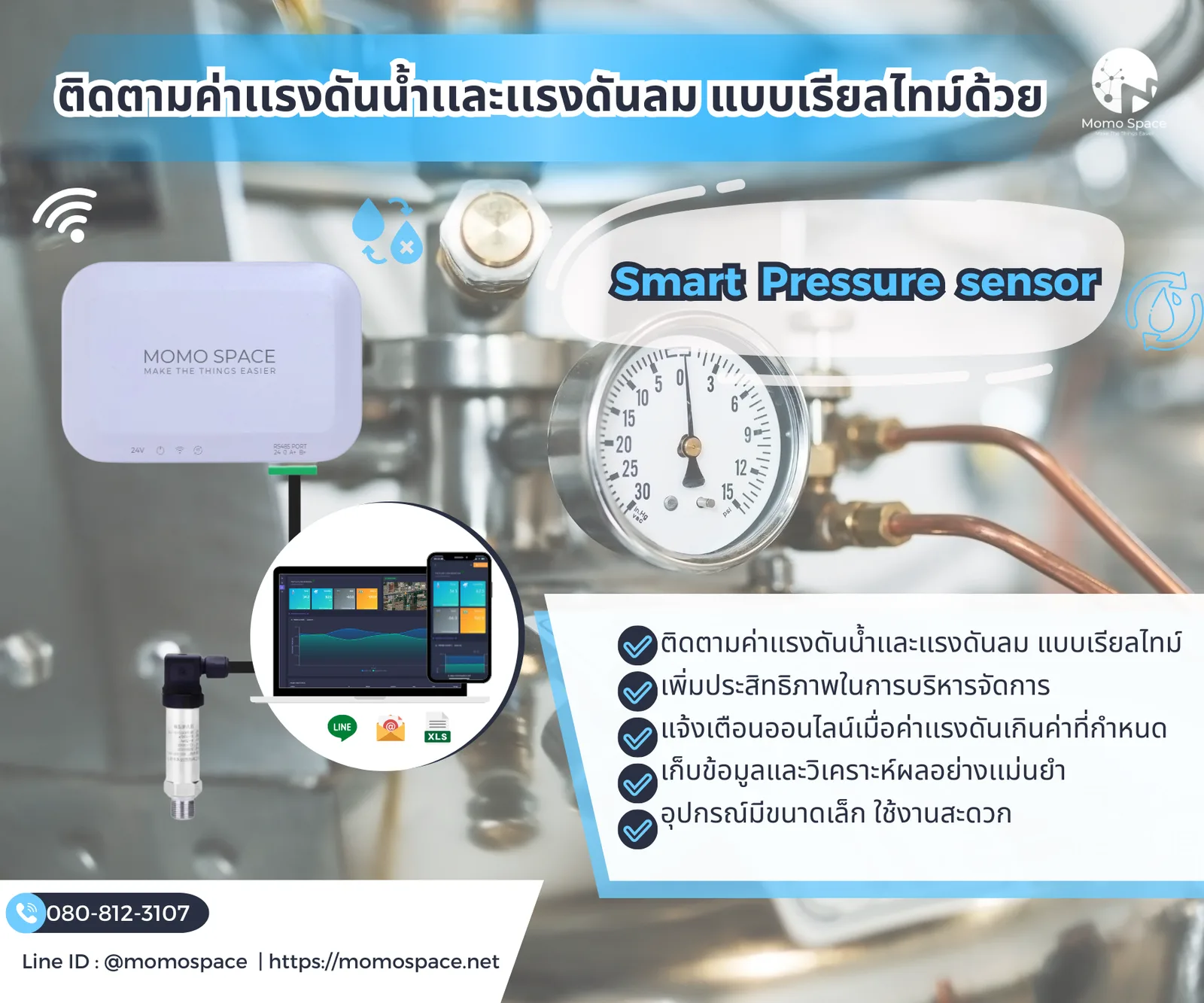
Tank level, line pressure, and volume from meters by zone
Gathers the sensors, runs the pumps on level, and sends the data up
Consumption history kept on servers in Thailand
Momosight spots flow that shouldn't be there — a steady draw at night, for instance
Tank levels, pump status and zone consumption on one screen
Pumps refill on level, with a LINE alert when water runs low or use looks wrong
What it does
Ground and roof tanks together, with warning before either runs dry.
Start and stop on level through the Auto Control Box — nobody switching them by hand.
Cycles and pressure, so a pump running longer than it should is caught early.
Which building or zone used the water — fewer arguments, and leaks easier to place.
Steady flow when nothing should be running usually means a leak.
Teams running several sites see them from one place.
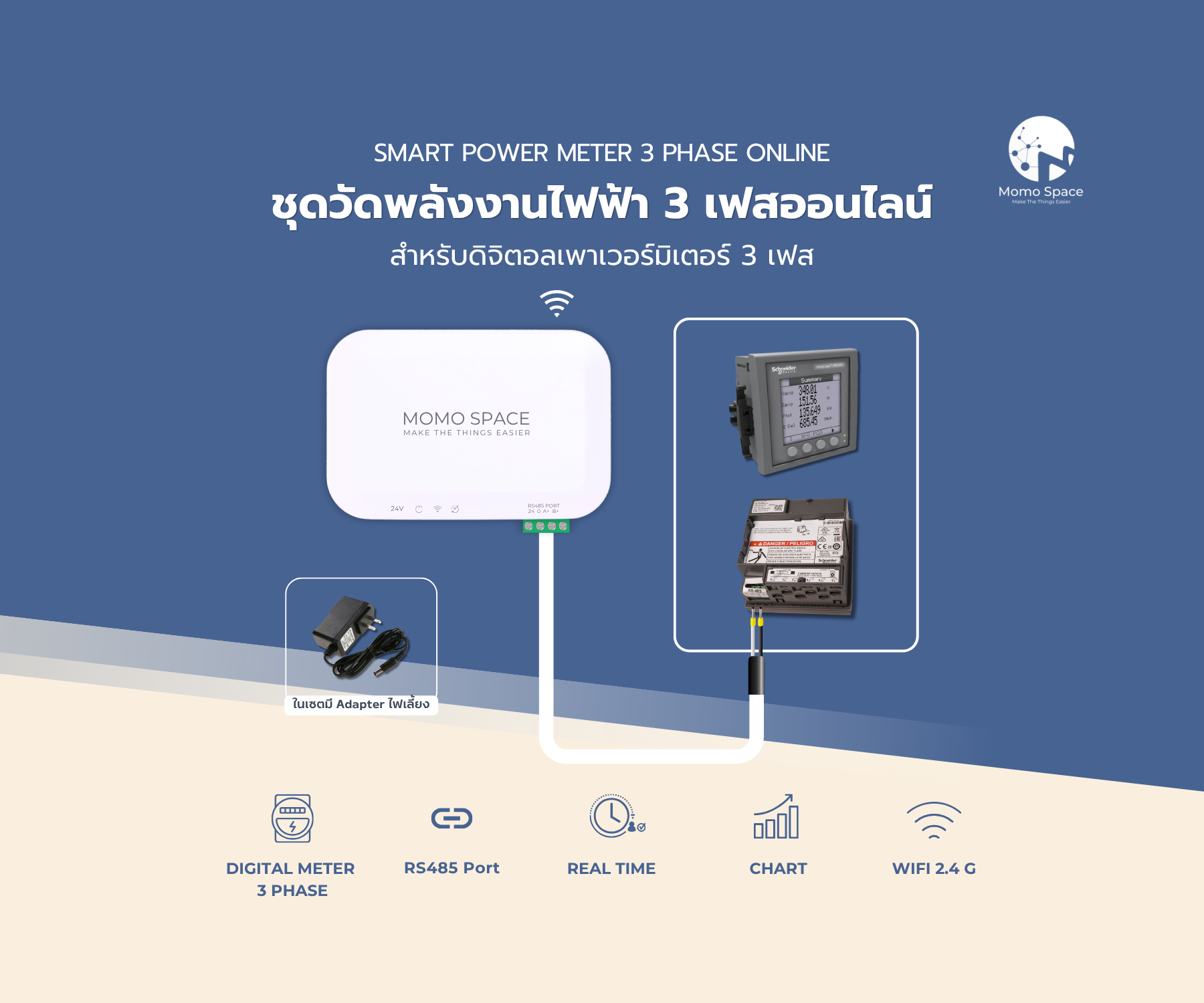
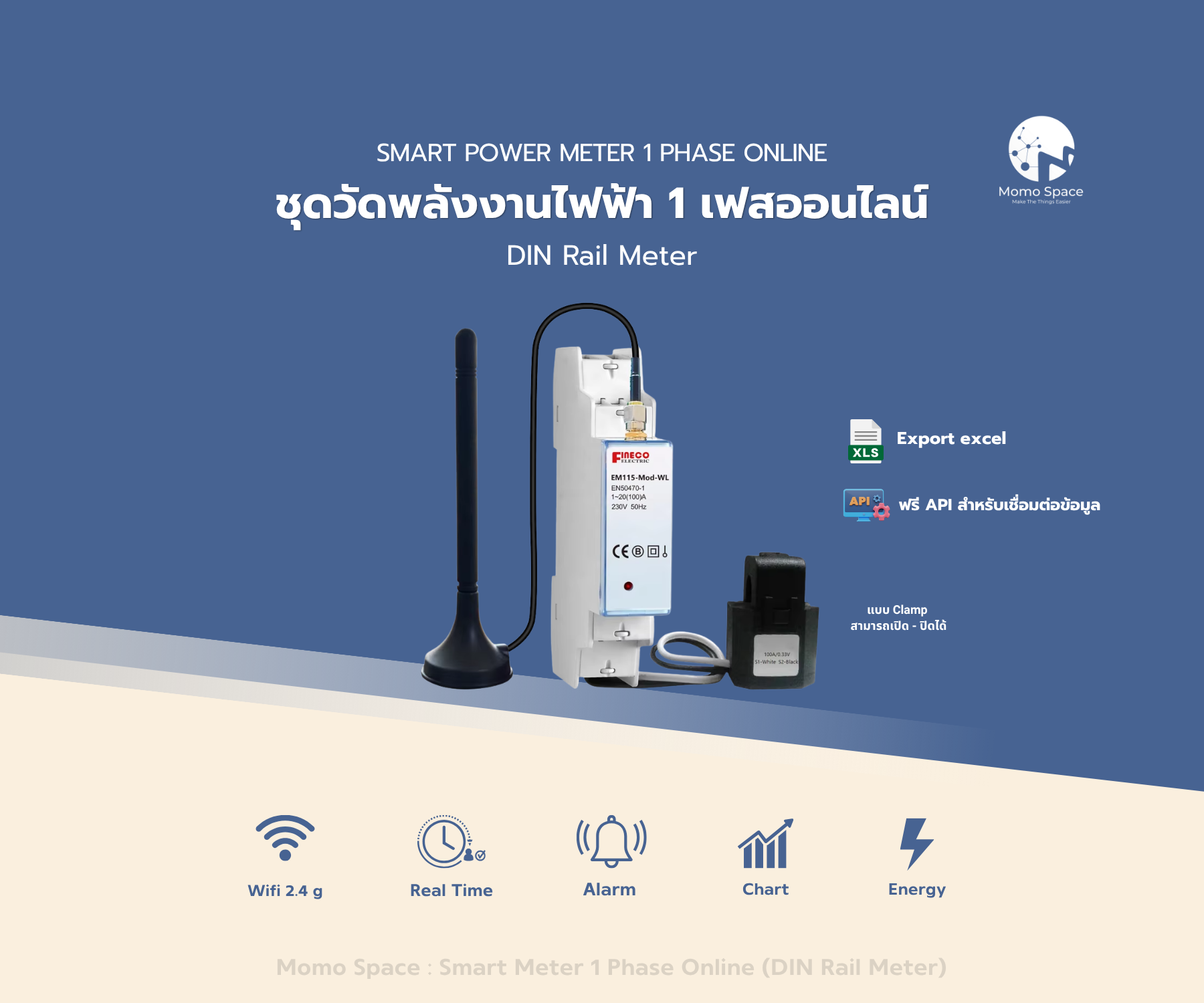
Devices used in this system
Prices are per set; how many you need depends on the site.
Where it fits
Process and domestic water
Storage tanks and booster pumps
Shared distribution
Several buildings on one site
Water that cannot be interrupted
Tanks and pumps spread across the grounds
How we work with you
- 01Survey the system
Tanks, pumps, pipework, and where zone meters belong.
- 02Install and test
Level and pressure sensors fitted, pump control wired, and the control proven.
- 03Levels and pump rules
Start and stop levels, alert thresholds, and the building team's LINE group.
- 04Support afterwards
Annual MA with remote and on-site support.
Related documents
Questions about this system
Does installation interrupt the supply for long?
Level sensors usually fit an existing hatch. Meters and pressure sensors need the line they sit on isolated briefly, and that can be booked outside working hours.
Do the pumps stop if the connection drops?
No. The controller runs on the levels set on it even without internet; alerts resume once it reconnects.
Can it use our existing water meters?
Yes, if they give a pulse output or speak Modbus — they can be read in without replacement.
How precisely does it find leaks?
It reads the pattern of flow — a steady draw when nothing should be running — so it points at the suspect zone. Pinpointing the leak itself still needs someone on site.