Machine Monitoring
“The machines hold the data; nobody is pulling it out”
CNC-02 stopped 14 times in the morning shift, 38 minutes in all, each just after a material roll change — check the feeder
- Every machine with its current state: running, stopped or alarming
- Inverter values such as frequency and current
- Run time accumulated today against time stopped
- The latest fault code the machine reported
Figures on this screen are illustrative; a real one shows readings from your own site.
What you see
- Inverters and control panels record everything, but only at the machine itself
- No one can say how many hours it actually ran today, or why it stopped
- A machine drawing more than it should goes unnoticed until it fails mid-run
What we do
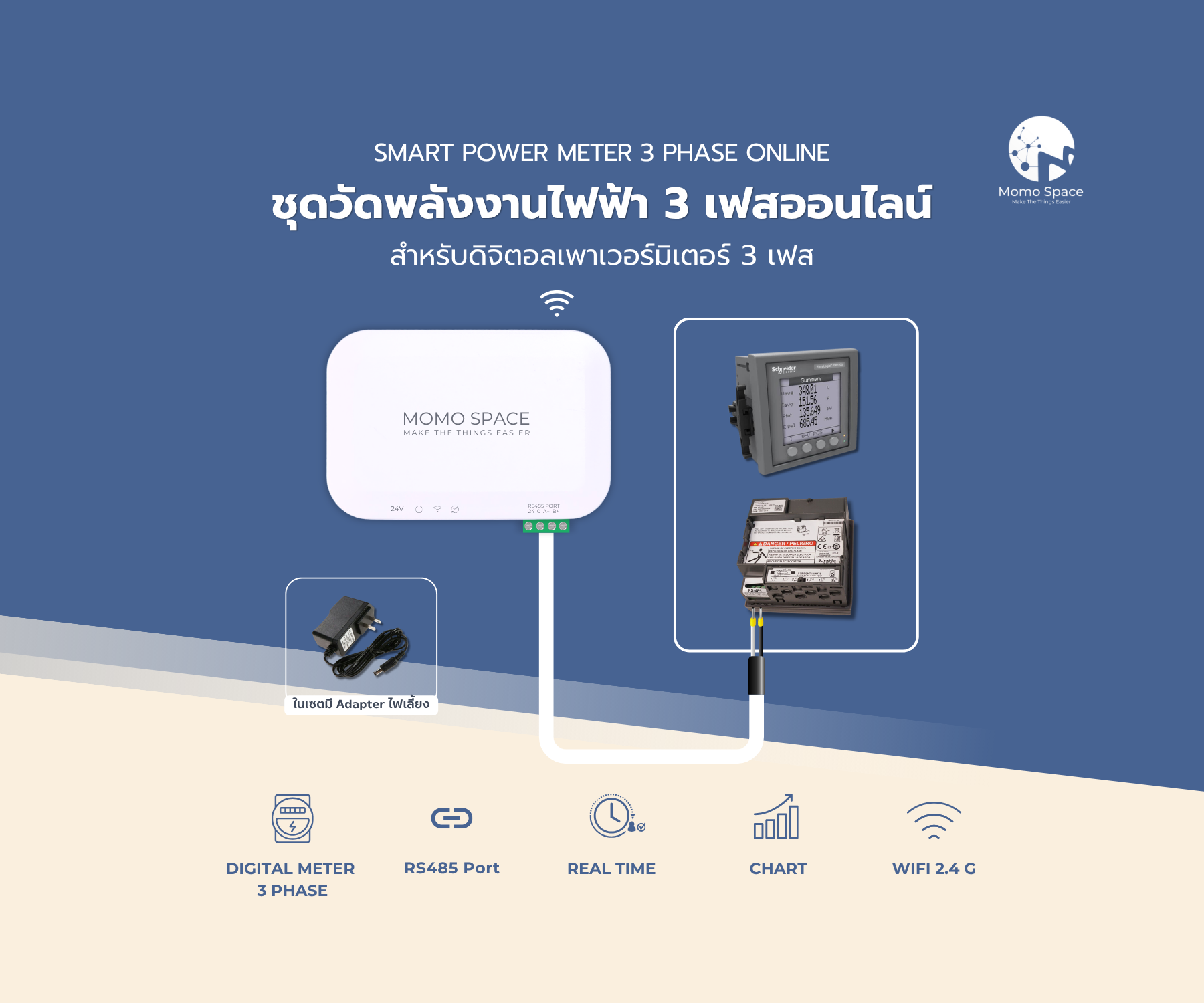
Inverter values read over Modbus (ABB, Schneider, Siemens), with per-machine power, temperature and vibration on one screen — run hours, downtime and fault codes together.
How it works
ABB, Schneider and Siemens drives read over Modbus, with status from the control panel
Mspace V2 collects several machines and sends them to the cloud
Run hours, downtime and fault codes kept on servers in Thailand
Momosight finds the stops that repeat and ties them to what happened just before
Every machine running, stopped or alarming, with the time each state has taken
LINE on a stop or a fault code, and a report each shift
What it does
Frequency, current, speed and fault codes from ABB, Schneider and Siemens over Modbus.
Time actually running separated from time stopped, so the day's losses are visible.
A machine drawing more than usual is often a mechanical problem announcing itself.
The mechanical half of the picture, not electrical readings alone.
Run time, downtime and alarm counts, emailed automatically.
Seen together from one place, with access per plant.
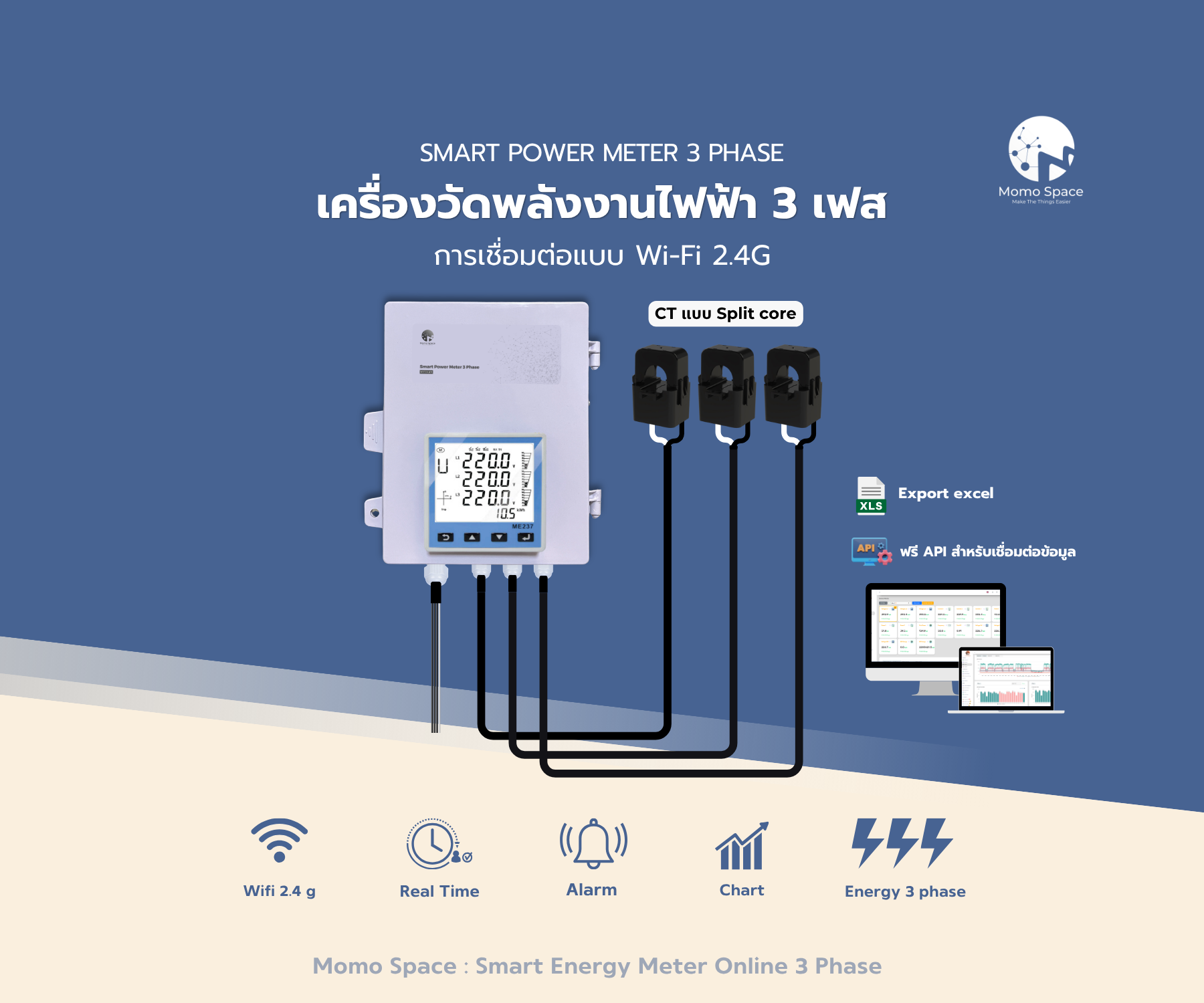
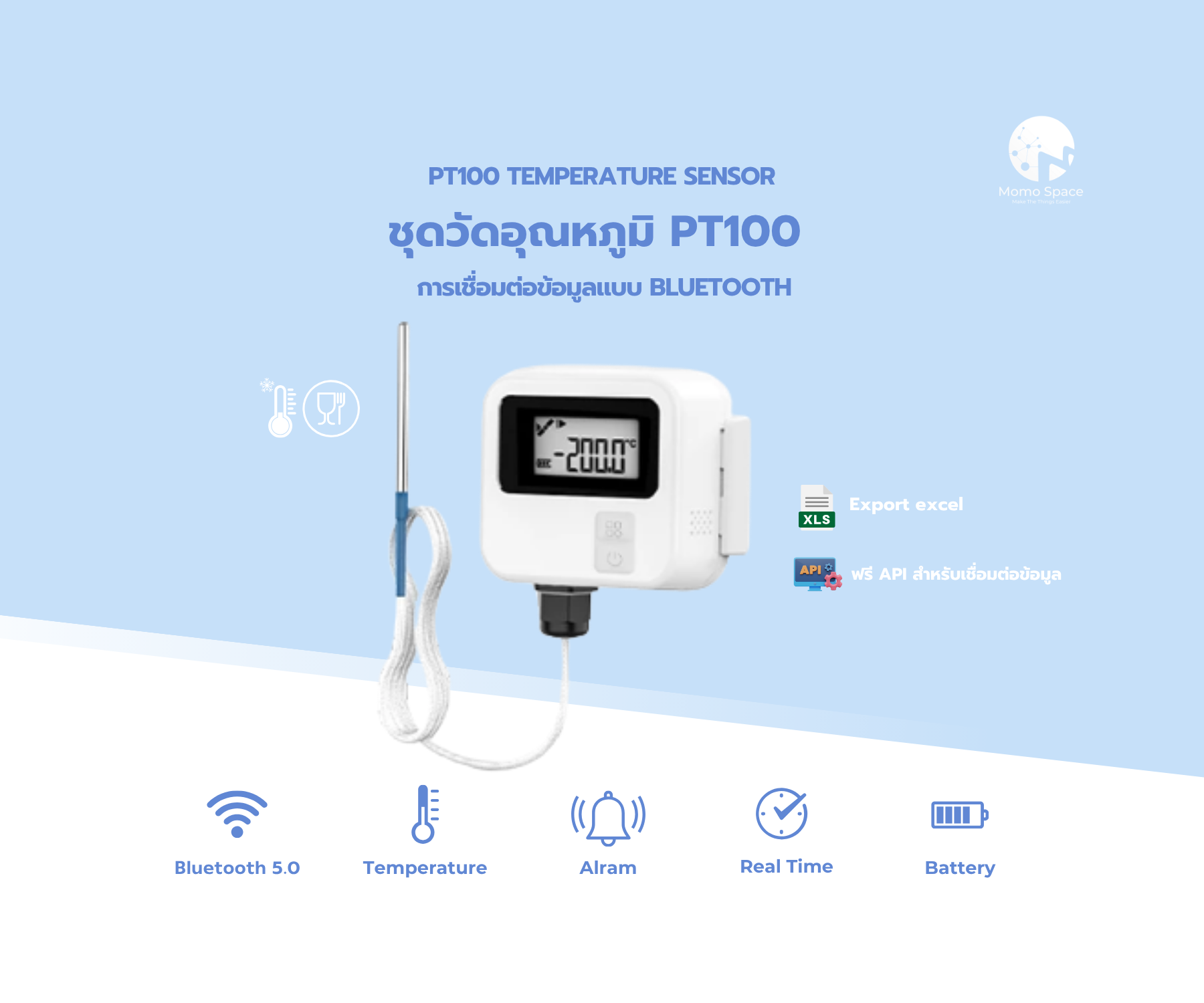
Devices used in this system
Prices are per set; how many you need depends on the site.
Where it fits
Continuous machines where one stop halts everything
Machines with a clear cycle
Work with frequent short stops
High power draw and long cycles
Many motors working together
Pumps, fans and compressors
How we work with you
- 01Survey the machines
Inverter makes and models, the ports they offer, and which states you want recorded.
- 02Wire and verify
Modbus to the drives, meters and extra sensors fitted, and readings checked against the machine's own display.
- 03Define states and reports
What counts as running, stopped and alarming, the report schedule, and the shift leaders' LINE group.
- 04Support afterwards
Annual MA with remote and on-site support.
Related documents
Questions about this system
Which inverter brands are supported?
ABB, Schneider and Siemens are in service over Modbus. Other makes with a Modbus port can be read too — send the model and we will check its register map first.
Do we get full OEE?
You get the availability side: real run time against planned time. Performance and quality need part and reject counts, which means signals from the PLC or a counting sensor — ask us and we will assess it.
Does the PLC program have to change?
No. We read the inverter and take status signals from the panel without touching the machine's control program.
How many machines to start with?
Start with the bottleneck, or the three to five whose stops cost the most, then expand once the data shows where to look.