Smart Chiller
“The chillers run hard all day, the cooling still falls short, and the bill doesn't move”
Delta-T has fallen to 5.4 K, below design — likely a valve held open at an AHU, returning water before it has done its work
- The loop: chiller, pump, and the load side
- Supply and return temperature with the current Delta-T
- Cooling load in tons against the power the chiller draws
- kW per ton — the number that says how well the plant is doing
Figures on this screen are illustrative; a real one shows readings from your own site.
What you see
- Nobody knows how much power goes in for the cooling that comes out
- Delta-T below design: chilled water returns too warm-to-cold to do its work
- Several chillers running when the load doesn't need them — noticed when the bill arrives
What we do
Chiller power, chilled-water supply and return temperatures and flow measured together, giving the real cooling load and the kW per ton, with a LINE alert when efficiency drops or Delta-T drifts.
How it works
Supply and return temperature, flow rate, and each chiller's power
Reads the meters and the chiller controller over Modbus or BACnet and sends it up
Every interval kept on servers in Thailand, so efficiency can be compared over time
Momosight compares kW per ton across chillers and load bands, and points at the hours Delta-T falls away
Cooling load, power and efficiency for the whole plant on one screen
LINE when efficiency slips, and a monthly report for the engineering team
What it does
Cooling worked out from measured flow and Delta-T, against measured power — kW per ton, from readings rather than a datasheet.
A Delta-T below design means water circulating without doing its work; the system catches it as it happens.
Which machine is the efficient one at which load — the basis for the staging order.
What the building actually needs through the day, so the right number of machines run.
LINE when readings drift, and a monthly efficiency report sent automatically.
Compare efficiency between buildings or branches from one place.
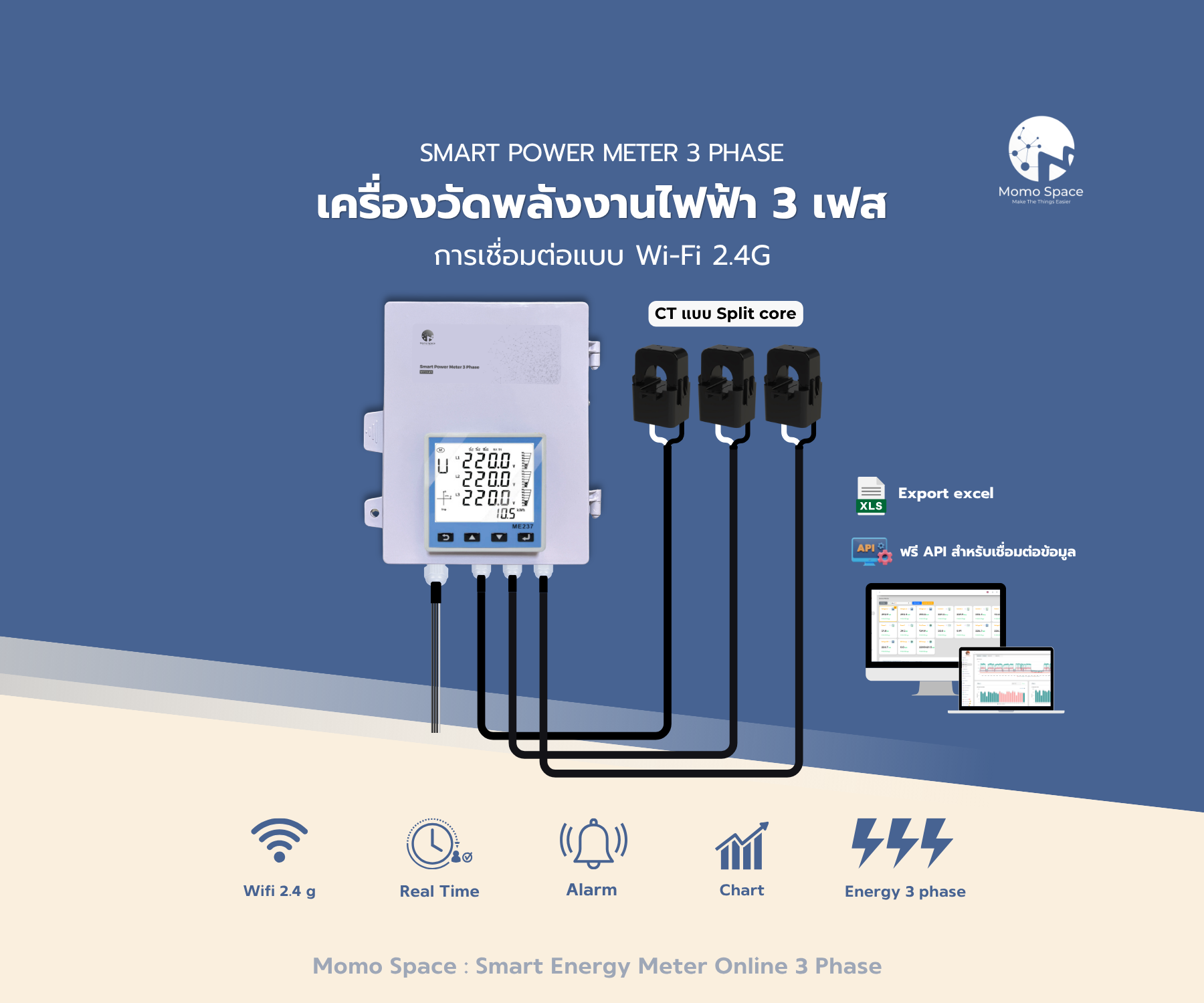
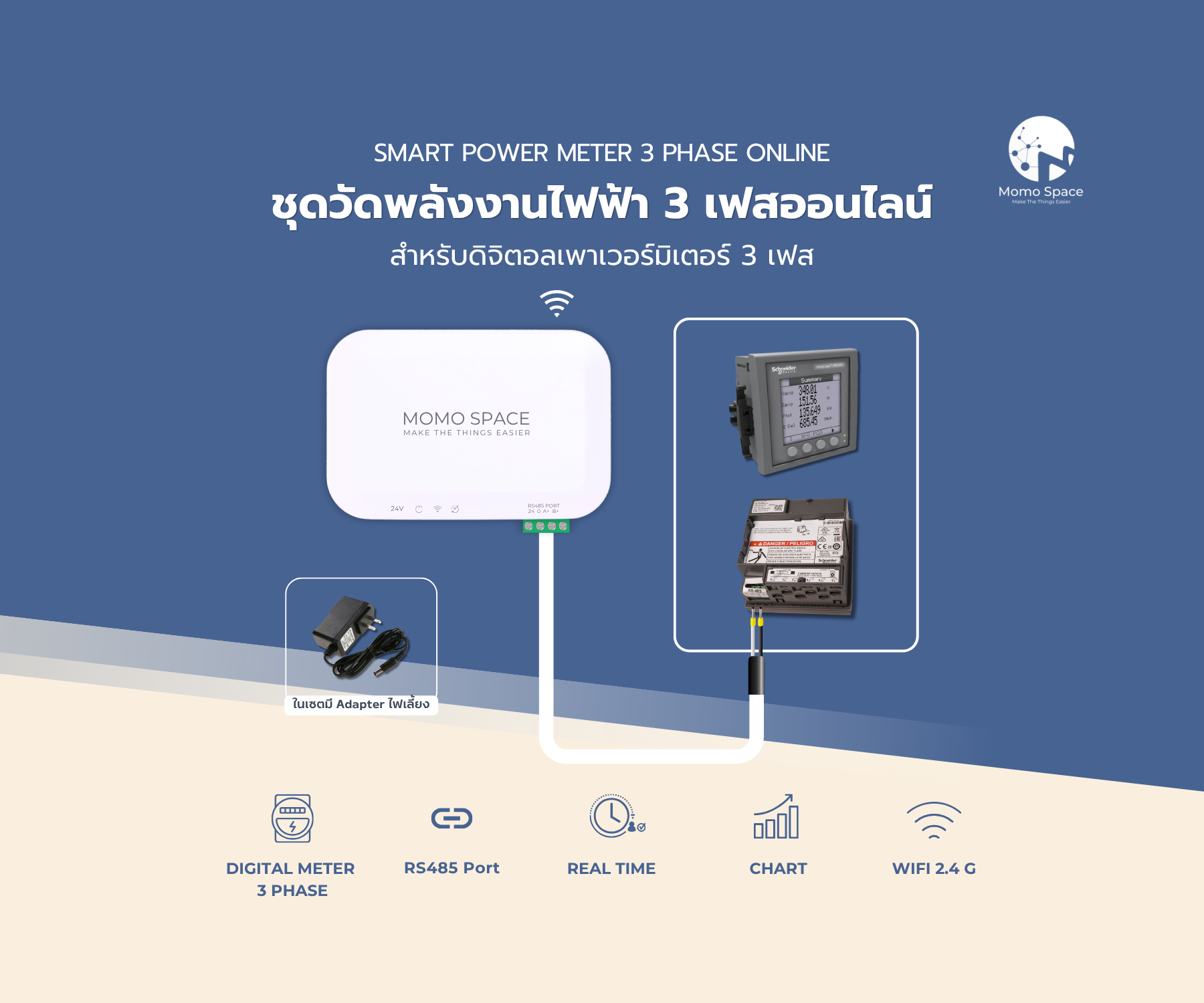
Devices used in this system
Prices are per set; how many you need depends on the site.


Where it fits
Central chilled-water plant
Load that moves with trading hours
Load that follows occupancy
Plant that cannot stop
Chilled water for process cooling
Peaks that come with events
How we work with you
- 01Survey the plant room
The chillers and their sizes, the pumps, the pipework, and where sensors and a flow meter can go.
- 02Install and check
Temperature sensors on supply and return, the flow meter and power meters fitted, then the readings verified.
- 03Design figures and limits
The plant's design values, Delta-T and kW/ton thresholds, and the engineering team's LINE group.
- 04Support afterwards
Annual MA, with efficiency reviewed on a cycle.
Related documents
Questions about this system
Does the plant have to be shut down to install it?
Temperature sensors strap to the pipe or use existing pockets. The flow meter depends on the type — some clamp outside the pipe with no cutting. We assess it on site and pick the least disruptive window.
Does it need to connect to the chiller controller?
Not necessarily. If the controller speaks Modbus or BACnet we read it too; if not, power, temperature and flow are all measured externally.
How is kW per ton calculated?
Cooling load from the measured flow and Delta-T, divided by the chiller's measured power over the same interval — all of it from readings, not from the machine's rating.
How much will it cut the bill?
It shows which chiller is efficient, how many should run, and what pulls Delta-T down. How much comes off depends on what the team changes; we do not promise a figure in advance.