Smart Motor
“A motor burns out mid-run, after a normal day yesterday”
Phase B has run 7% above the others for three days, with vibration rising — check the bearing and the alignment
- Current on all three phases, side by side so imbalance shows
- Motor temperature against the limit set for it
- Vibration level right now
- Accumulated run hours and the next service
Figures on this screen are illustrative; a real one shows readings from your own site.
What you see
- Current differs between phases, and nobody sees it until the motor runs hot
- The motor and its bearings warm up little by little, noticed when something smells
- Vibration climbs from a bearing or a misalignment, found after the failure
What we do
Per-phase current, motor temperature and vibration measured continuously and compared with that motor's own normal, with a LINE alert as soon as a reading drifts.
How it works
Per-phase current, motor and bearing temperature, and vibration
Collects the meters and sensors over WiFi, a BLE gateway or a 4G SIM
Each motor's own normal kept as the baseline, on servers in Thailand
Momosight compares today against that motor's usual behaviour and says what the pattern looks like
Every motor ordered by risk, with current readings and history
LINE when a reading drifts, and a reminder at the service interval by real run hours
What it does
A difference between phases is the first electrical warning, seen before the motor runs hot.
PT100 sensors following the slow climb that precedes a failure.
Rising vibration from a worn bearing, a misalignment or an unbalanced rotor.
The baseline is that motor's history, not a generic figure that may not fit the site.
What the service interval should follow, and whether the motor is being started too often.
All of them ranked by risk from one screen.
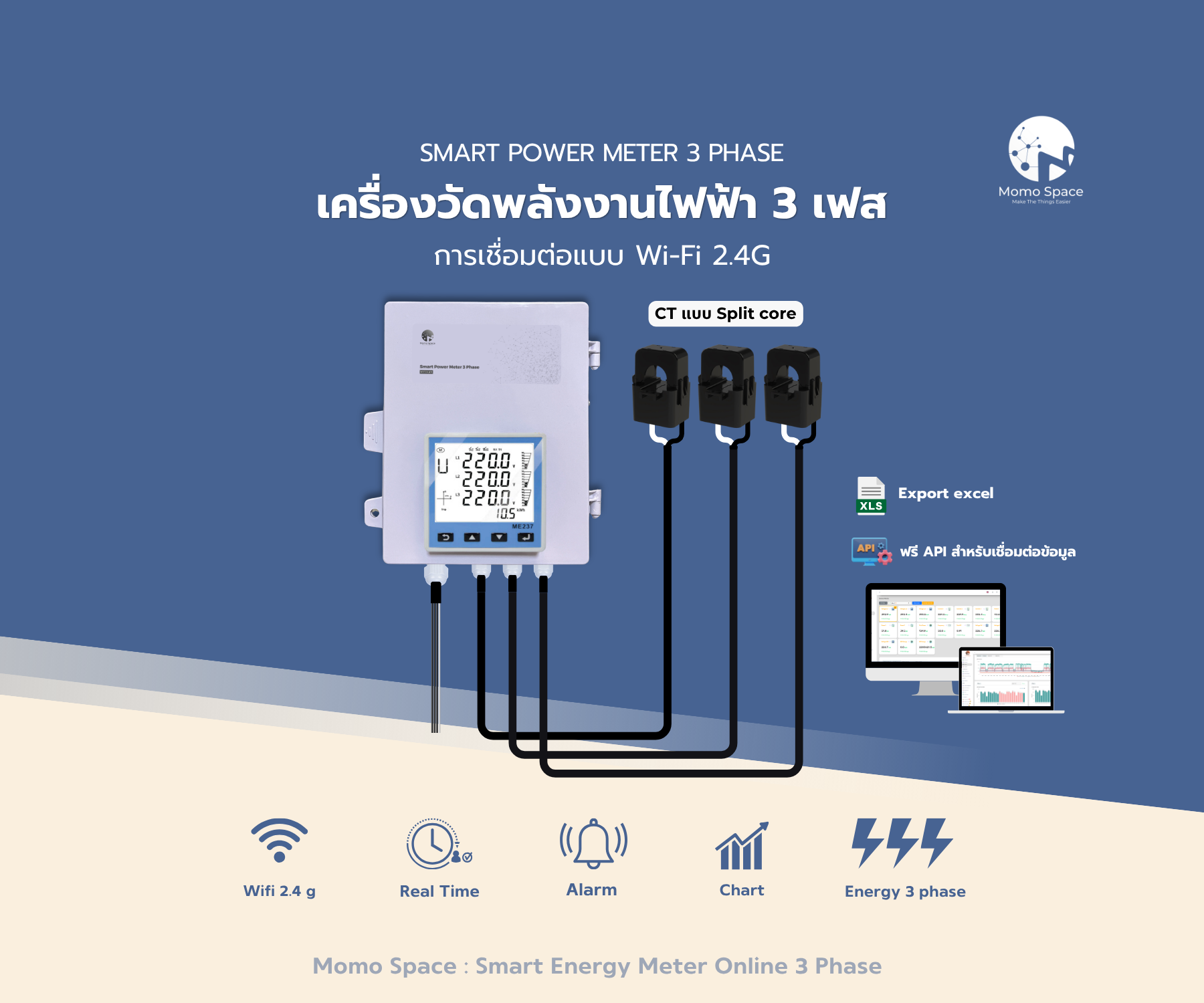
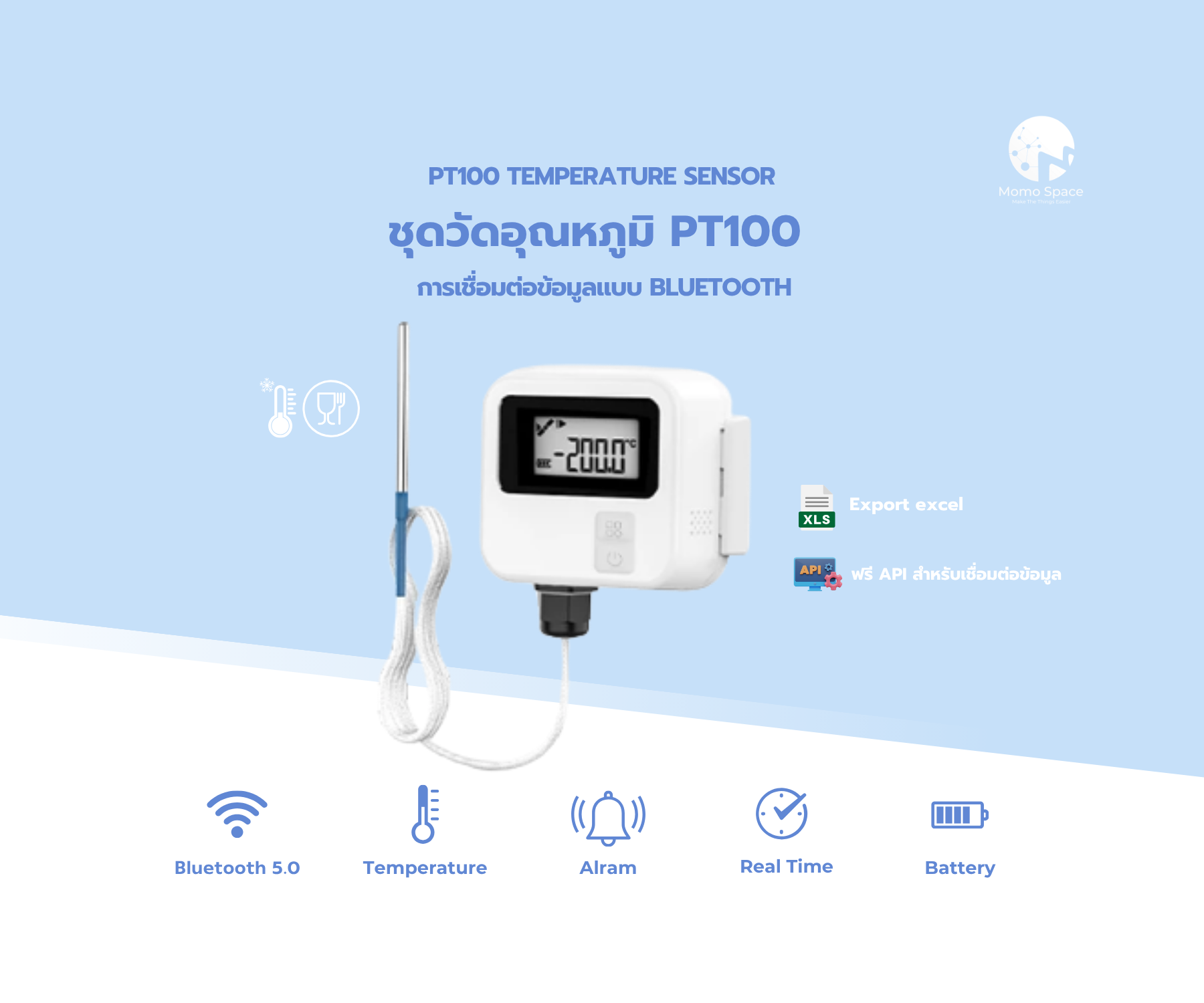
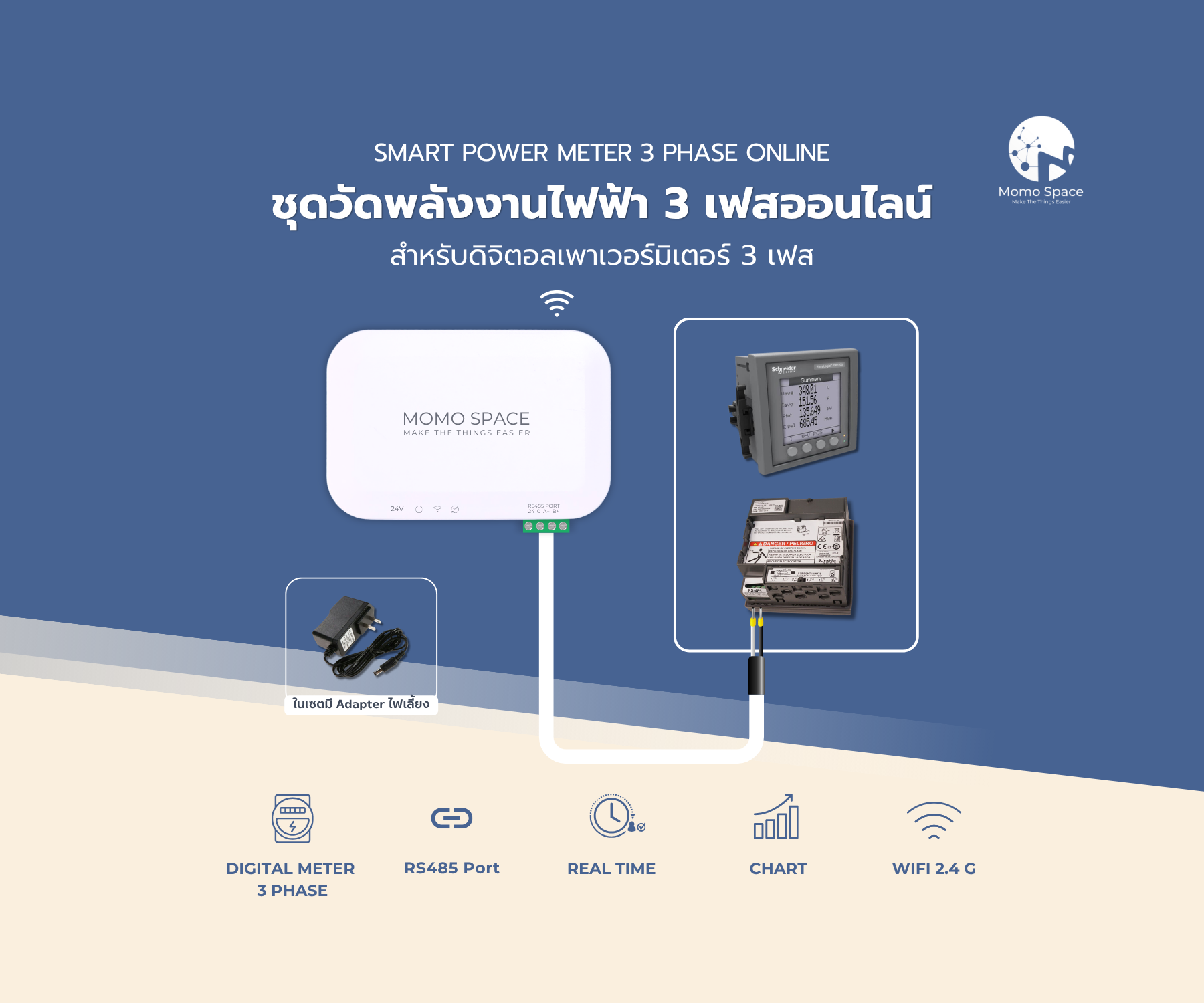
Devices used in this system
Prices are per set; how many you need depends on the site.
Where it fits
Motors that run almost continuously
Building plant that cannot stop
One stop halts the whole line
Large motors that take days to repair
Sites with nobody in attendance
Systems users notice immediately
How we work with you
- 01Survey the motors
Sizes, ratings, mounting, and which motors matter most to start with.
- 02Install and learn normal
Sensors fitted, then a period of healthy running recorded as the baseline.
- 03Thresholds and recipients
Limits for temperature, imbalance and vibration, and the maintenance team's LINE group.
- 04Support afterwards
Annual MA with remote and on-site support.
Related documents
Questions about this system
Does the motor have to be stopped to install?
Current is measured with clamp-on CTs, no cutting. Temperature and vibration sensors mount on the motor itself, which can be booked into a short stop or a production break.
How accurate is the prediction?
The system tells you a reading is drifting from that motor's normal — heat or vibration climbing — which is a reason to inspect. It does not name the day it will fail.
How many motors to start with?
Most start with the three to five whose failure costs the most, then expand once the data proves itself.
Does it work with motors on inverters?
Yes. If the inverter speaks Modbus we read it too, which puts the electrical and mechanical pictures side by side.